
Our digital world runs on an invisible foundation. These are data centers: immense, specialized buildings housing countless computer servers. They are the physical infrastructure enabling everything from streaming videos to complex AI calculations. With the explosion of artificial intelligence, their importance is rapidly growing. Many people rarely consider these critical facilities. However, they are essential for our interconnected lives.
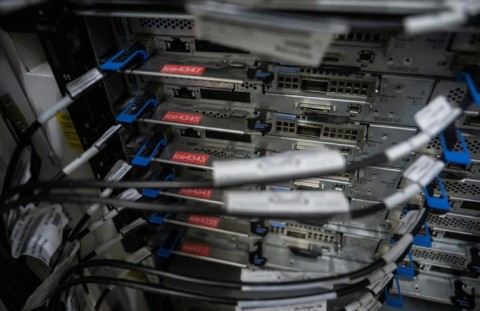
Inside these fortified structures, thousands of servers hum in unison. These servers are neatly arranged in metal racks, forming dense corridors of computing power. High-speed networking equipment connects every component. This ensures massive data transfers occur in milliseconds. Traditionally, these facilities were located near urban centers. This provided faster service for users. However, land costs and local resistance are pushing new developments towards rural areas. This creates a delicate balance. Operators must weigh proximity for speed against affordability and ease of construction.
One of the biggest challenges for data centers is managing immense heat. Server racks generate as much heat as several household ovens. AI-specific chips, like GPUs, intensify this issue further. They can reach extreme temperatures. Therefore, cooling systems consume a significant portion of a data center's energy. Modern facilities are innovating beyond traditional air conditioning. They are adopting liquid cooling systems. These directly target components or use evaporative methods. Moreover, some facilities now employ 'free cooling,' utilizing outside air when ambient temperatures permit. Nevertheless, massive quantities of water are still crucial for these cooling processes.
Securing a reliable power supply is equally critical. Data centers operate 24/7, demanding continuous, high-voltage electricity. The burgeoning AI sector, with its powerful GPUs, only amplifies this need. Many tech giants face difficulties finding locations with adequate grid access. In response, operators are exploring new strategies. Some are integrating solar panels or gas turbines for 'behind-the-meter' power generation. Furthermore, there is growing interest in future technologies like Small Modular Reactors (SMRs). These promise more localized, secure energy. Additionally, extensive battery banks and diesel generators provide essential backups, guaranteeing uptime.
The evolution of data centers reflects our growing reliance on digital services and AI. They are no longer just warehouses for data. They are sophisticated ecosystems balancing immense computational power with critical environmental and logistical demands. My analysis suggests that future innovations will focus heavily on energy efficiency and sustainable cooling methods. Furthermore, the strategic placement of these digital nerve centers will continue to be a key consideration. What new solutions do you think will define the next generation of data centers?